
Are you a top-down thinker?
Are you a bottom-up thinker?
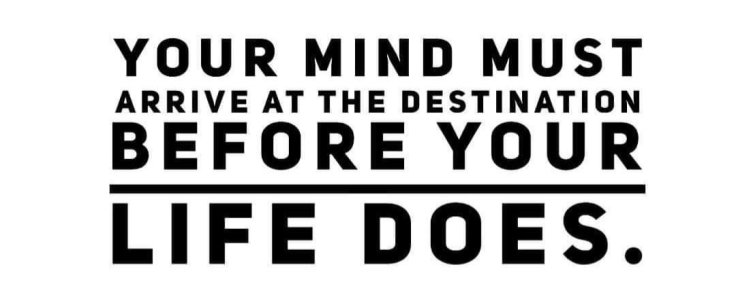
In other words, do you think about the target, goal, or objective before you even start? Training yourself to work from the top down will help you mitigate the pressure of stress and adversity.
Hint: There WILL be stress and adversity, regardless of what you’re doing.
You need them to:
1) Grow
2) Identify what’s working
3) Identify what requires modifications
Would you build your house first and then create the blueprint? Or would it make sense to create the blueprint (the outcome) and then reverse-engineer the steps? If you would use a blueprint to build a house, aka start from the top down, why not use this method in every aspect of your life?
This is also the most effective way to solve problems. Too many people catastrophize when they face any type of problem. Instead of focusing on solutions, they focus more on the problem and the worst possible outcomes.
“If I don’t fix this mistake, my boss will fire me and I’ll never work in this industry, again.”
Instead of focusing on the problem, spend at least 90% of your time on the solution. The top-down method can help lower your anxiety because your mind will shift toward the solution and the steps required to get it. Forget about why the mistake happened or who caused it; you can do that later.
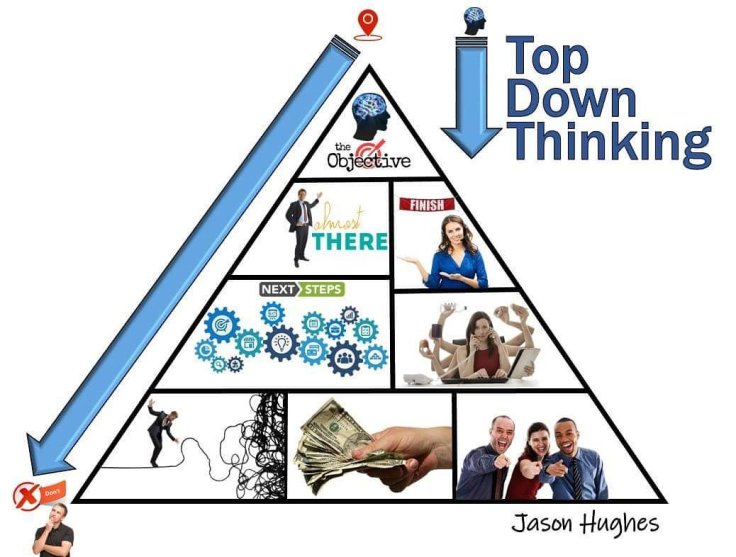
In the example, I demonstrated how you can learn to compartmentalize things so that you operate more efficiently. If you don’t compartmentalize the steps, the odds of you quitting along your journey will steadily increase. Bottom-up thinking doesn’t allow this because you’re working without a plan, meaning you don’t know what’s coming or how to prepare for it.
“I’ll figure out how to fix it, once it happens.” (Reactive)
Here are some examples of things you’ll be up against along your journey:
- People will laugh or misunderstand what you’re doing
- Self-doubt
- Spending your hard-earned money or not having enough money
- Multi-tasking: your personal and professional responsibilities do not slow down just because you’re focused on something
- Difficulties in balancing your personal and professional schedules
- Losing motivation: it has a short lifespan
- Two steps forward, one step back: obstacles on your path
- The fear of being successful: What if I can’t handle it once I make it?
Remember, your focus is on the outcome, not the steps that scare you or require much work.
Bottom line: Top-down thinking will set you up to win. Does it take practice? Absolutely. But just like everything else, it requires consistency and discipline.
For more tips about how you think, reference my latest book:

Discover more from Jason Lee Hughes
Subscribe to get the latest posts sent to your email.

 Jason Lee Hughes